Affiliate disclosure: This post contains affiliate links. If you buy through them, we may earn a small commission at no extra cost to you.
Open the cabinet under your kitchen or bathroom sink. Go on — we'll wait. If you were greeted by a leaning tower of half-empty bottles, a mystery sponge and a pipe that eats a third of the space, you're in good company. The under-sink cabinet is the messiest spot in almost every home, because it's deep, dark, interrupted by plumbing — and it's where "I'll deal with this later" goes to live. Here's how to turn it into the hardest-working cabinet you own, in about an hour.
Step 1: Empty everything and be ruthless
Pull every single item out and line it all up on the counter. Now sort fast, without overthinking:
Toss anything expired, dried out, rusted or unidentifiable. Combine duplicates — three half-empty glass cleaners are one full one. Relocate anything that doesn't actually belong near a sink (batteries, light bulbs, that bag of bags). Most people finish this step with a third less stuff, and nothing they miss.
Wipe the cabinet floor while it's empty, and lay down a cheap under-sink mat or liner — leaks happen, and a liner saves the cabinet. Shop on Amazon →
Step 2: Work around the pipes, not against them
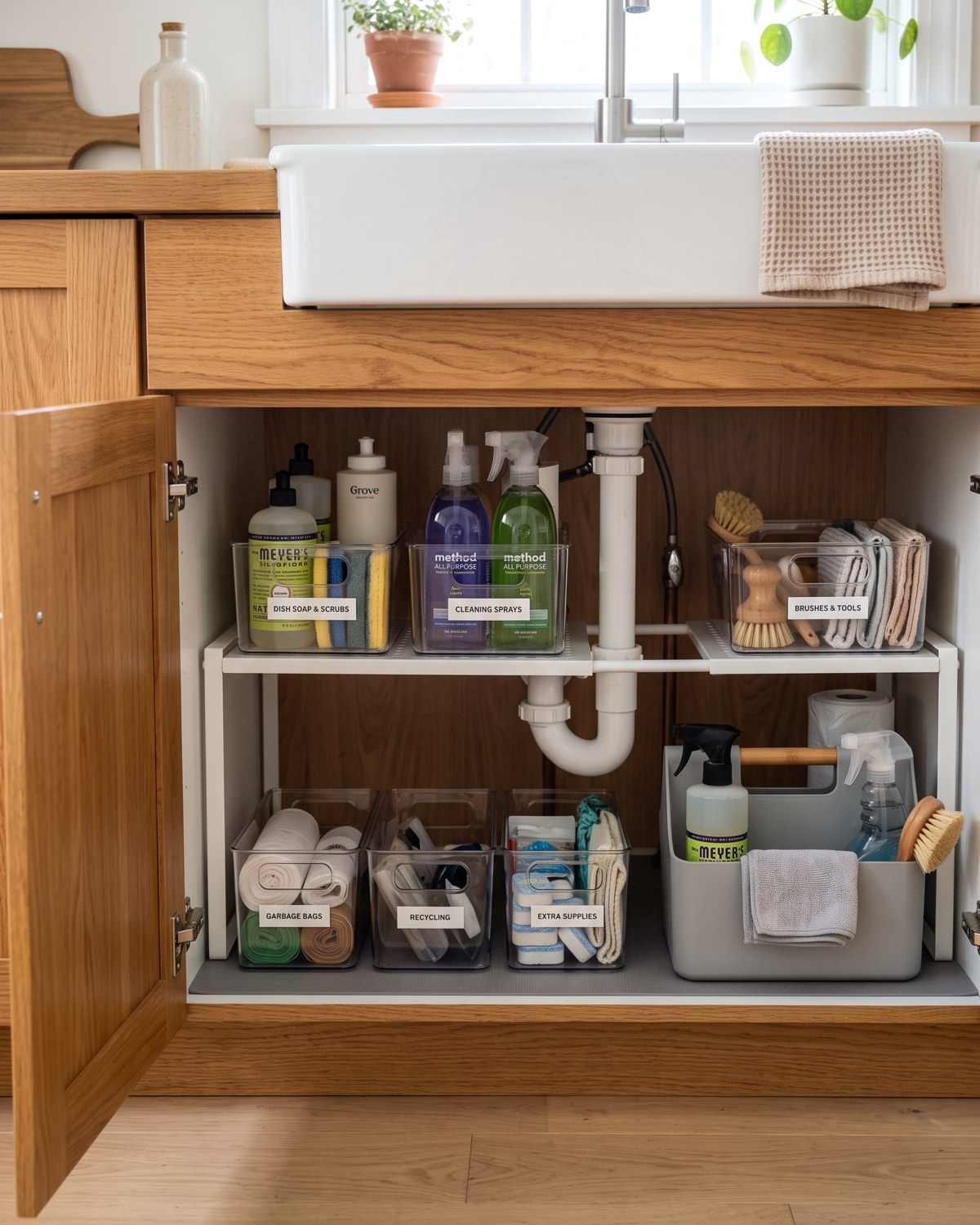
The reason regular shelves fail under a sink is the plumbing. The fix is storage designed for it: an expandable under-sink shelf organizer has adjustable panels and legs that slide around the P-trap, instantly doubling your usable vertical space. Shop on Amazon → Measure the cabinet width and pipe position before you buy — two minutes with a tape measure saves a return.
Step 3: Give everything a zone
Group items by task, not by size:
Daily cleaning — dish soap, spray, sponges — front and center. Weekly cleaning — bathroom spray, cloths — one layer back. Refills and backstock — the tallest, rarely-touched items — in the deep back corners, where nothing important ever survives anyway.
Corral each zone in a bin so it slides out like a drawer. Clear stackable bins with handles are perfect here: you can see what's inside in a dark cabinet, and one pull brings the whole zone to you. Shop on Amazon →
Step 4: Use the door and the walls
The inside of the cabinet door is free real estate. An over-the-door organizer or adhesive caddy holds sponges, brushes and gloves right where you reach for them. Shop on Amazon → A small tension rod across the front of the cabinet turns spray bottles into hanging storage — their triggers hook right over it, freeing the floor below.
Step 5: The caddy trick that keeps it tidy
Here's the habit that makes this system stick: keep a portable cleaning caddy under the kitchen sink with one of each essential — all-purpose spray, glass cleaner, a cloth, a scrub brush. Shop on Amazon → When it's time to clean, you grab the caddy and go room to room. No hunting, no duplicates migrating around the house, and everything returns to one home when you're done.
The five-minute monthly reset
Once a month, do a quick scan: pull anything that crept in, wipe the liner, check for drips. Five minutes keeps you from ever doing the full excavation again.
A tidy under-sink cabinet sounds like a small win — but it's one you open every single day. Start with the kitchen this weekend; the bathroom takes half as long once you've done it once.