Affiliate disclosure: This post contains affiliate links. If you buy through them, we may earn a small commission at no extra cost to you.
A pet doesn't have to mean a home that looks like a pet store exploded. The bowls, the toys, the bags of kibble, the fur-covered blanket on the good sofa — it all adds up fast. But with a few dedicated zones and some storage that actually looks like furniture, you can give your cat or dog everything they need while keeping your space calm and grown-up. Here's how to organize a home around the animals you love.
Start with a cozy zone they'll actually use
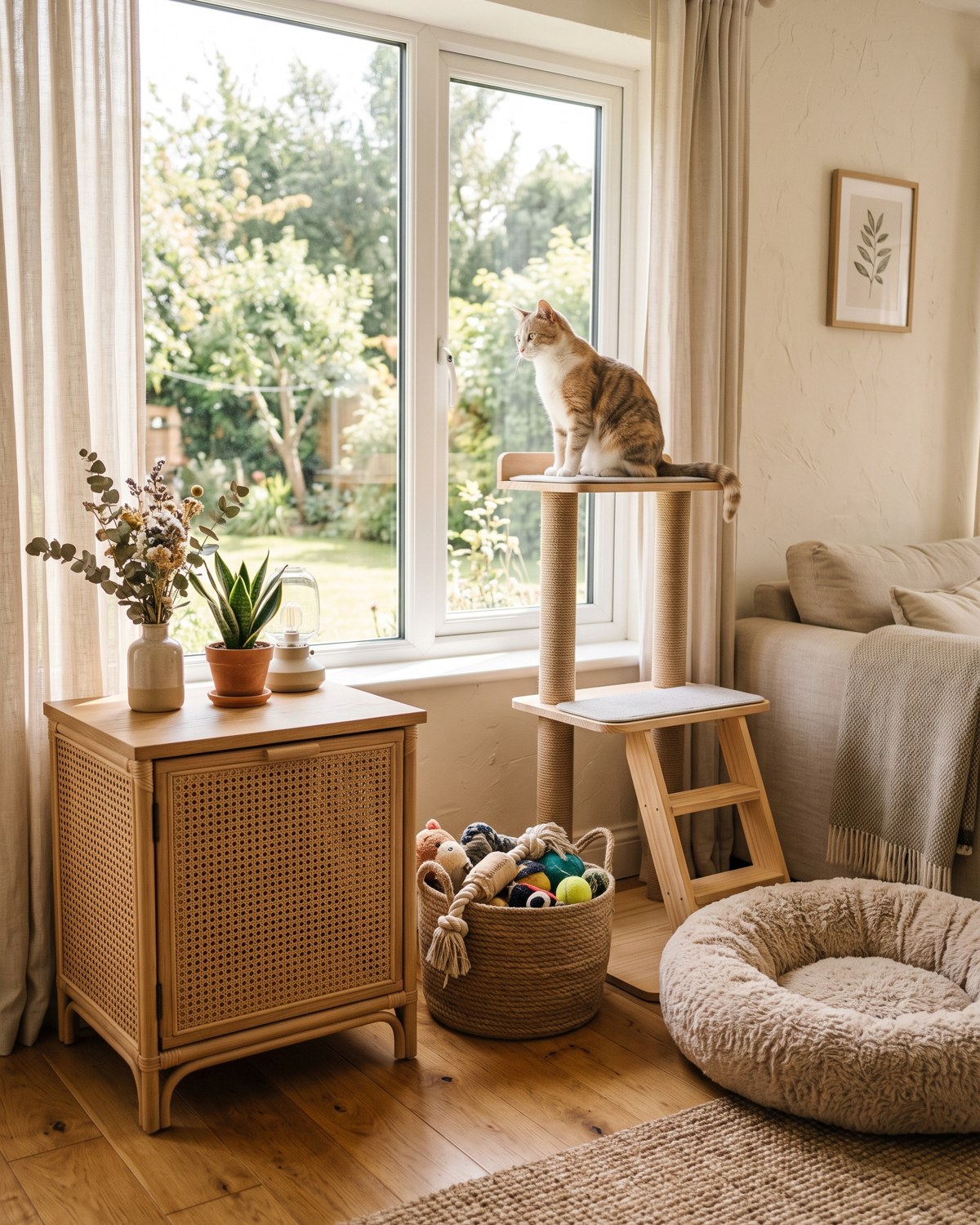
Pets, like people, feel calmer when they have a spot that's clearly theirs. Instead of a bed shoved wherever there's a gap, choose one intentional corner — near the family but out of the main traffic path — and make it their zone. A soft, washable bed anchors it. A calming dog bed with raised edges gives anxious dogs something to burrow into, and the cover comes off for the wash when muddy paws happen. Shop on Amazon →
For cats, height is everything. A cat tree near a window turns unused vertical space into a lookout, a scratching post and a nap perch all at once — and it draws claws away from your sofa arm. Shop on Amazon → Place it where your cat already likes to sit and they'll adopt it in a day.
Corral the toys in something you don't have to hide
Pet toys migrate. By evening they're under the couch, in the hallway, in your shoe. The fix is the same one that works for kids: one basket, low to the ground, that everything gets tossed into at the end of the day. A pet toy storage basket in natural rope or seagrass looks intentional in a living room and doubles as a quick two-minute reset. Shop on Amazon → Bonus: most dogs learn to grab their own toy from a bin they can reach.
Hide the food, not just the bowls
A ripped paper bag of kibble slumped in the pantry is both an eyesore and an open invitation to pests. Decant food into an airtight pet food storage container — it keeps kibble fresh, keeps ants and moths out, and stacks neatly in a closet or utility corner. Shop on Amazon → Look for one with a scoop and wheels if you buy the big bags. Keep a few days' worth in a smaller labeled jar near the feeding station so the giant container stays tucked away.
For the feeding spot itself, a boot tray or a low mat under the bowls catches splashes and stray kibble, so cleanup is one quick wipe instead of a sweep.
The litter box problem, solved with furniture
Nobody wants a plastic litter box as a focal point. The modern fix is hidden litter box furniture — an enclosed cabinet, often in rattan or wood, that looks like a side table or bench while giving the cat privacy and containing the mess. Shop on Amazon → Rattan versions fit right into a warm, natural-material home and double as a surface for a plant or a lamp. Put a small mat inside the entrance to catch tracked litter, and keep a slim scoop and bag caddy in the same cabinet so the whole task lives in one place.
Give the gear a drop zone by the door
Leashes, harnesses, poop bags, the towel for muddy paws — this is the stuff that ends up in a tangled heap. Treat it like a mini entryway station: a couple of wall hooks at the right height for leashes, a small basket for bags and treats, and the paw towel hung underneath. Everything you grab on the way out lives in one spot, and everything you need on the way back in is right there too.
Manage the fur before it manages you
Keep a lint roller or rubber pet-hair brush in the room where fur collects most, not in a closet across the house — convenience is what makes you actually use it. A washable throw over the pet's favorite sofa cushion means you wash a blanket, not the whole couch. And a quick daily pass with the vacuum on the one rug they love beats a marathon clean-up every weekend.
The five-minute pet reset
Once a day, do a quick loop: toys back in the basket, bowls rinsed, bed blanket shaken out, leashes back on their hooks. Five minutes keeps the pet clutter from ever taking over — and gives your cat or dog a calm, cared-for home, which is the whole point.
Start with the cozy zone this weekend. Once your pet has a place that's clearly theirs, everything else — the toys, the food, the gear — has an obvious home too.