Affiliate disclosure: This post contains affiliate links. If you buy through them, we may earn a small commission at no extra cost to you.
When you need your passport, a tax record, or the car title, you need it now — not after an hour of digging through drawers. Organizing your important documents once, with a simple system, means you'll never panic-search again. Here's how to set it up in an afternoon.
Step 1: Gather every important document in one place
Walk through the house and collect everything official: IDs, tax records, insurance, medical, home, auto, warranties, and financial papers. Pile it all in one spot so you can see the full scope.
Step 2: Sort into clear categories
Keep it simple — most households need just these:
- Identity: passports, birth certificates, Social Security cards.
- Financial: bank, investment, loan statements.
- Home: lease or mortgage, deeds, repairs.
- Auto: title, registration, insurance.
- Medical: records, immunizations, insurance cards.
- Taxes: returns and supporting documents.
- Warranties & manuals: for things you still own.
Step 3: Give them a real home
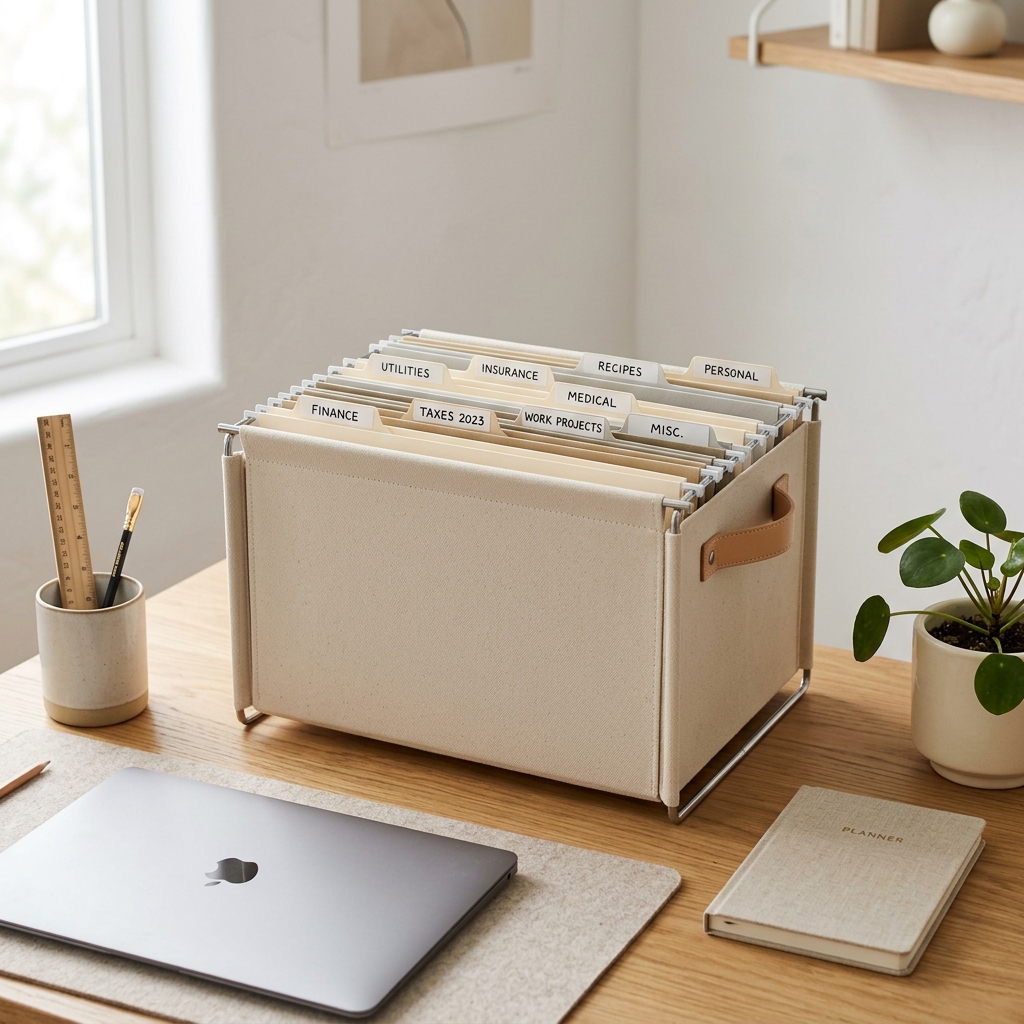
A portable hanging file box with labeled folders is all most families need — it's lockable-ish, grab-and-go in an emergency, and keeps everything upright and visible. Shop on Amazon → Add a label maker so every folder is clear and consistent — labeled systems are the ones that actually get maintained. Shop on Amazon →
Step 4: Protect the irreplaceable
A handful of documents can't simply be reprinted — passports, birth certificates, the deed. Keep these in a fireproof, water-resistant document bag or safe so a flood or fire doesn't turn a bad day into a catastrophe. Shop on Amazon →
Step 5: Shred what you don't need
You don't need to keep everything. Shred old statements, expired documents, and anything with sensitive info you no longer require. A small home shredder protects you from identity theft and keeps the file box lean. Shop on Amazon →
Step 6: Make a digital backup
Paper can be lost or destroyed. Scan your most important documents with a phone app and store them in a secure, password-protected cloud folder that mirrors your physical categories. Now you have a copy even if the originals are gone.
How long to keep what
General guidance: keep tax returns and supporting documents for several years, and permanent records (IDs, deeds, certificates) indefinitely. When in doubt about legal or tax records, keep rather than toss — or check current official guidance.
Frequently asked questions
What's the best way to organize important documents at home? A labeled hanging file box sorted into clear categories, plus a fireproof bag for irreplaceable papers and a digital backup of the essentials.
Which documents should I never throw away? Identity documents, deeds and titles, certificates, and anything legal. These are hard or impossible to replace — keep them protected.
How do I keep the system up to date? File new documents immediately into the right folder, and do a 15-minute review once a year to shred what's outdated.
The bottom line
Organizing your documents once — sorted, filed, protected, and backed up — means you'll find anything in under a minute and never panic-search again. Start with a labeled file box this weekend, and protect the irreplaceable few in a fireproof bag.
Set up your file box and move just your identity documents in first — that's the most important 10 minutes of this whole project.