Affiliate disclosure: This post contains affiliate links. If you buy through them, we may earn a small commission at no extra cost to you.
When someone's sick or hurt, you need to find the right thing fast — not dig through a jumble of expired bottles and loose bandages. An organized medicine cabinet is one of those quiet wins that genuinely matters. Here's how to set one up safely, plus build a first-aid kit you can actually rely on.
Step 1: Empty it and check every date
Pull everything out and check expiration dates — expired medicine can be ineffective or unsafe. Set aside anything past its date for proper disposal (more on that below). You'll likely clear out half of what's in there.
Step 2: Group by category
Sort what's left into clear groups so you can grab the right thing in seconds: - Pain & fever (acetaminophen, ibuprofen) - Cold, cough & allergy - Stomach & digestion - First aid (bandages, antiseptic, gauze) - Daily medications & vitamins
Step 3: Contain each group
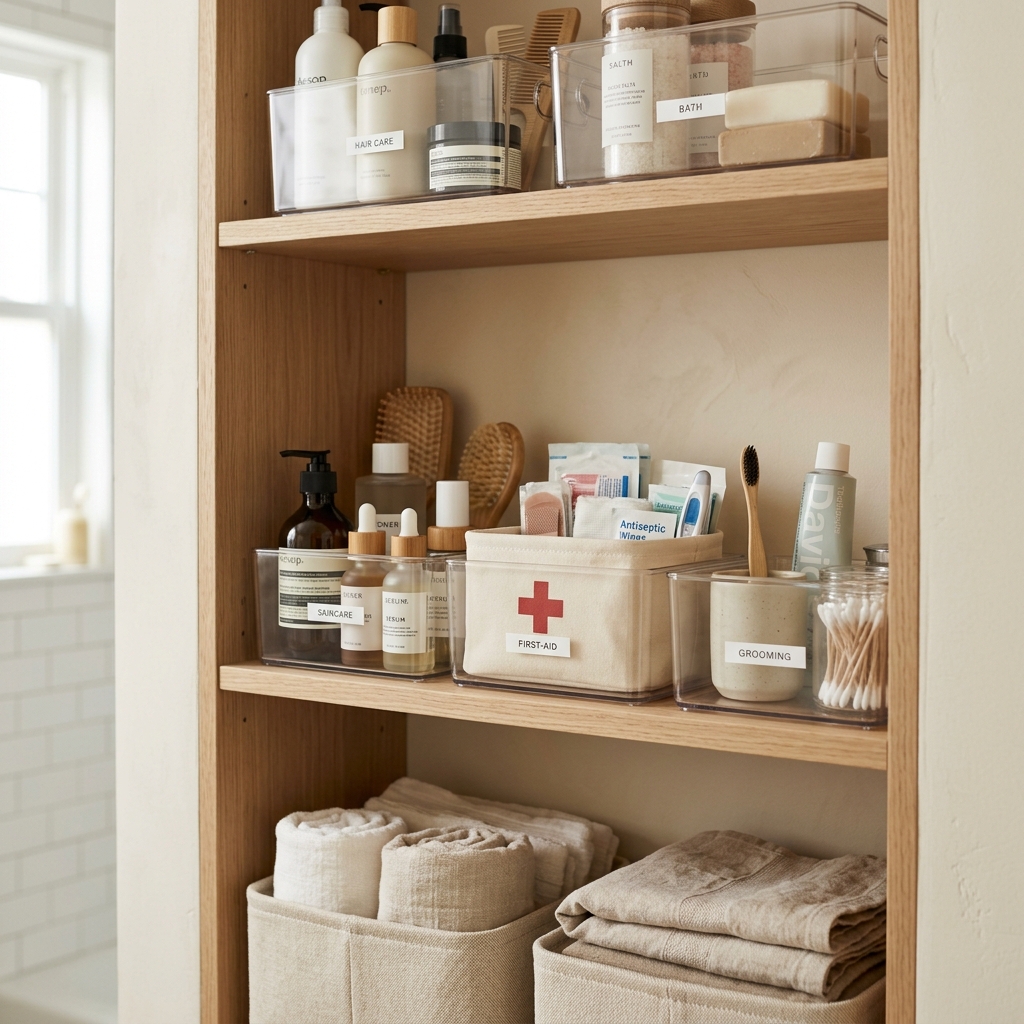
Small clear bins or drawer organizers keep each category together and visible, so nothing hides in the back. Clear is best here — you want to see everything at a glance. Shop on Amazon →
Step 4: Build a real first-aid kit
Don't rely on a scattered drawer in an emergency. A dedicated first-aid kit — stocked and in a known spot — means everyone in the house can find it fast. Shop on Amazon → Check and restock it twice a year.
Step 5: Store medicine safely
- Not in the bathroom. Heat and humidity actually degrade many medications. A linen closet or bedroom shelf is better.
- Up and away from children and pets — a high shelf or a lockable medicine box if you have little ones. Shop on Amazon →
Step 6: Dispose of old medicine properly
Don't just toss expired pills in the trash or flush them. Use a pharmacy take-back program or a community drug-disposal site. It's safer for kids, pets, and the water supply.
Keep it current
Twice a year — when the clocks change is an easy reminder — spend ten minutes checking dates and restocking. A current medicine cabinet is one you can trust on a bad day.
Frequently asked questions
Where should I store medicine instead of the bathroom? Somewhere cool and dry, like a linen closet or bedroom shelf — heat and humidity from the shower degrade many medications.
How do I organize a medicine cabinet? Toss expired items, group by category (pain, cold, stomach, first aid, daily meds), and contain each group in clear bins so everything is visible.
How do I dispose of expired medication? Use a pharmacy take-back program or community disposal site rather than the trash or toilet.
The bottom line
A safe, organized medicine cabinet means clearing the expired, grouping by category, containing each group, and storing everything cool, dry, and out of reach. Add a real first-aid kit in a known spot, and you'll be ready when it counts.
Check every expiration date today and pull the expired ones — it's the safest ten minutes you'll spend this week.
Medication storage and disposal guidance can vary; when in doubt, follow the directions on the label or ask your pharmacist.